
8 Sept 2026
Small changes in limb position can significantly affect blood pressure readings in anaesthetised dogs, a new study has shown.

Chris Simpson
Job Title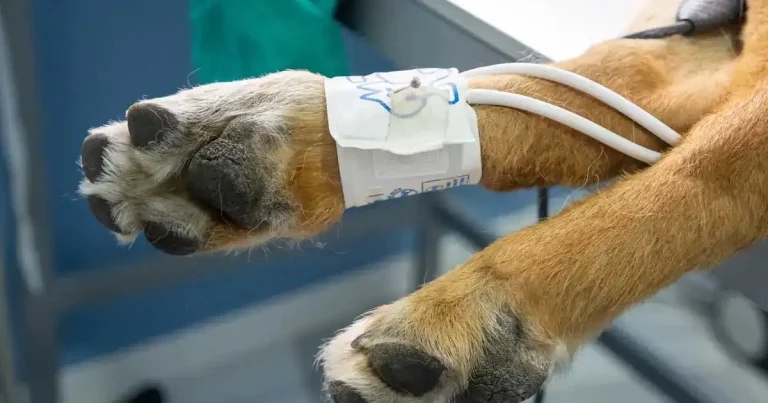
Image: GaiBru Photo / Adobe Stock
Researchers at the University of Cambridge investigated how variations in limb positioning, when compared with the standard reference position, affect arterial blood pressure (ABP) values in healthy dogs under general anaesthesia.
They found that moving a blood pressure cuff just a few centimetres above or below base of the heart level can lead to clinically significant discrepancies in blood pressure readings.
For the study, published in the Journal of Small Animal Practice, blood pressure measurements were taken in 22 dogs presented for elective neutering procedures at The Queen’s Veterinary School Hospital between May 2024 and March 2025.
The dogs, of which 12 were female and 10 were male, had a median age of 29 months and bodyweight of 11.5kg.
Using the petMAP Graphic II device, the scholars took three measurements – systolic (SAP), mean (MAP) and diastolic (DAP) arterial blood pressure – for a total of 18 measurements per dog, positioned in dorsal recumbency.
They were taken at one-minute intervals for each limb and position, with the centre of the blood pressure cuff aligned at the level of the base of the heart as well as above and below that height by a distance equivalent to 20 per cent of each dog’s thoracic depth.
When the thoracic limb was positioned below the heart base, both SAP and MAP readings increased significantly, with median differences of 2.8mmHg and 3.7mmHg, respectively.
There was also a positive correlation between the difference in MAP and dogs’ bodyweight, with heavier dogs showing changes in MAP at greater magnitude.
In the pelvic limb, elevating the cuff above heart base level led to significant decreases in SAP, MAP and DAP readings ,with median differences of 5.9mmHg, 6.1mmHg and 6.2mmHg, respectively.
The authors noted differences in subsequent measurements of SAP less than 5mmHg are considered an acceptable error during non-invasive blood pressure monitoring in human patients, so while there are no recognised standards in veterinary patients, they suggest reading errors of more than 5mmHg may be clinically relevant.
The paper concluded: “The clinical implication of the study findings is that even small deviations of the cuff position, as little as 3cm above or below the heart base, can result in considerable SAP and MAP discrepancies which, for the pelvic limb, can be as high as 6mmHg.
“This magnitude of discrepancy may represent a clinically significant threshold, affecting the anaesthesiologists’ decisions and actions resulting in either unnecessary and potentially detrimental administration of fluids and vasopressors, or omission of necessary interventions.
“This further emphasises the importance of ensuring that reliable ABP measurements are obtained with both the cuff and limb correctly positioned prior to confirming states of [hypotension] or hypertension, and act accordingly.”